

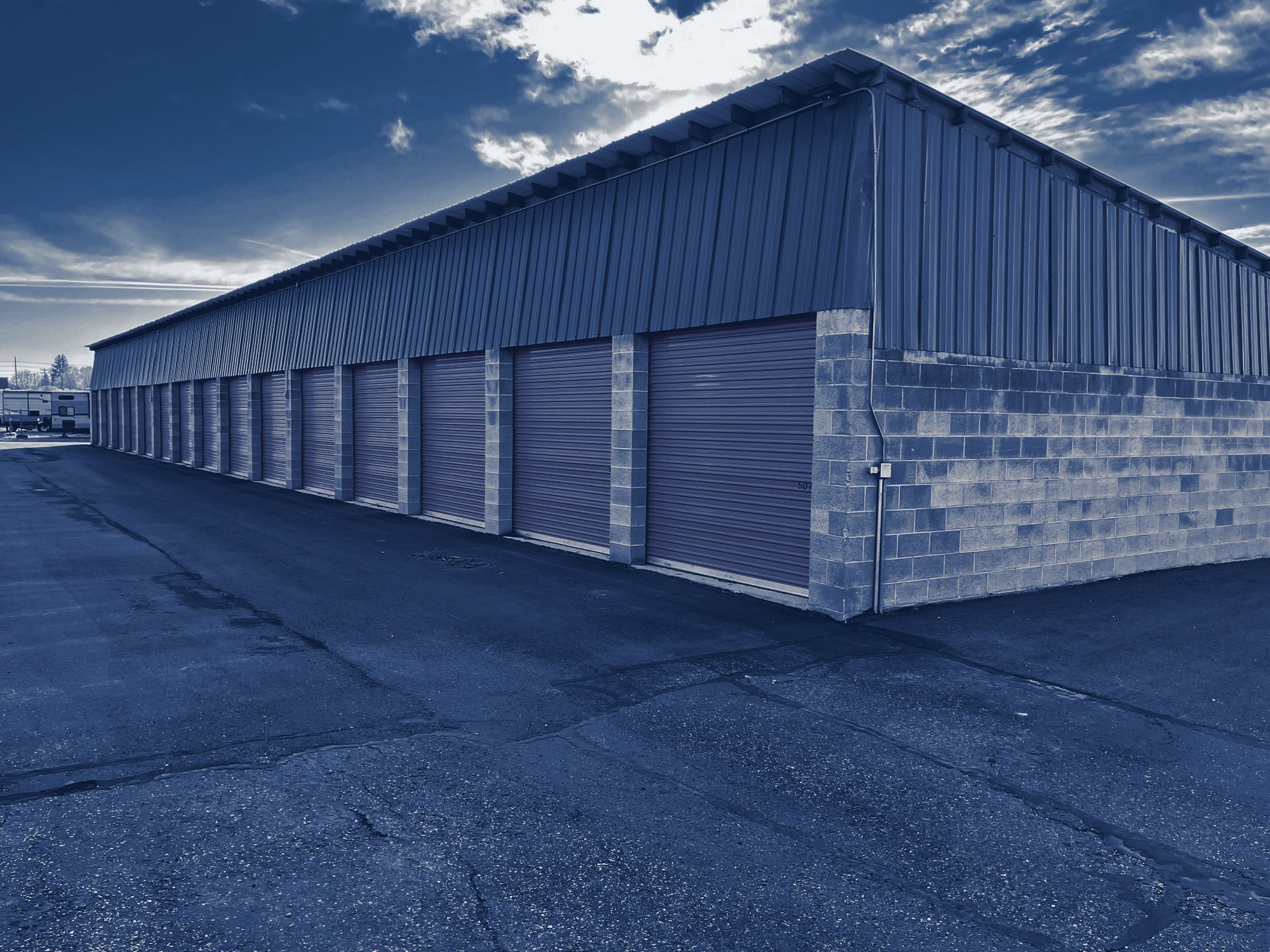
Every self-storage facility we consider tells a story about its past management, its market, and its potential. Our job during evaluation is to read that story carefully and decide whether we can write a better next chapter. Some facilities are well located and simply need attention. Others look attractive on paper but carry problems that would be expensive or impossible to fix.
Cotra Ridge acquires, develops, and operates self-storage facilities. Before we recommend an acquisition to Cotra’s investment committee, our team works through a consistent set of questions about location, physical condition, unit mix, access, room to grow, and the operating improvements we believe are possible. The answers become the foundation of the written business plan that every Cotra property carries.
This article walks through those questions in roughly the order we ask them. The order matters. Some issues, like a poor location, cannot be solved with capital or effort, so we look at them first. Others, like outdated systems or inconsistent pricing, are often the very reason a facility is worth acquiring.
Throughout the process, we try to separate what we observe from what we hope. Seller materials, market reports, and our own enthusiasm all have a place, but the recommendation rests on what our team has verified on site and in the records.
Location and visibility
Self-storage is a local business. Most customers choose a facility close to where they live or work, and many decide within a short drive. So we start by understanding the trade area: the households and businesses nearby, how the area is changing, and how much storage already serves it.
“Some issues, like a poor location, cannot be solved with capital or effort, so we look at them first.”
Within that trade area, the specific site matters. We look at visibility from the road, ease of turning in and out, signage, and whether the facility sits on a route people already travel. A facility that customers pass on their daily commute has an advantage that is hard to replicate. A facility that is hard to find or awkward to enter has a disadvantage that marketing alone rarely overcomes.
We also look at the competitive picture honestly. How many facilities serve the same customers? How do they compare in condition, security, and convenience? Is new supply planned nearby? A market with healthy demand can still be a difficult place to own a facility if more space is coming than customers need.
Physical condition
Once a location makes sense, we turn to the buildings. Our due diligence includes a detailed inspection of roofs, doors, paving, drainage, fencing, gates, lighting, and, where present, climate-control systems and elevators. We want to know not only what condition each element is in today but how long it is likely to last and what it will cost to repair or replace.
Water is a particular concern. Storage customers are trusting us with their belongings, and leaks or poor drainage can damage them. We look carefully at roof history, signs of past water intrusion, grading around buildings, and how stormwater moves across the site. We also review environmental reports and any history of issues with the property.
The result of this work is a capital plan, not just an inspection report. We estimate what the facility needs in its first years of ownership, when those needs are likely to arise, and how they fit into the business plan. A facility that needs significant work can still be a sound acquisition, provided the work is understood and priced before we commit.
Unit mix and layout
A facility’s unit mix is the combination of sizes and types it offers: small lockers, standard drive-up units, larger spaces for vehicles or business inventory, and climate-controlled units. The right mix depends on the trade area. Apartment residents may want smaller units, nearby businesses may want larger ones, and some customers need climate control for documents, furniture, or electronics.
We compare the existing mix against the demand we observe. Which sizes are consistently full? Which sit vacant? Are customers renting two small units because the size they need is not available? These patterns often point to opportunities, such as reconfiguring interior space with movable partitions or converting underused areas.
Layout matters as well. Wide drive aisles, sensible turning room for trucks, convenient loading areas, and logical unit numbering all make a facility easier to use. Some layout problems can be improved with modest changes; others are built in and will remain for as long as the buildings stand. We note which are which, and we price them accordingly.
Access and security
How customers get into the facility, and how well it protects their belongings once they are inside, are central to its value. We review gate and keypad systems, access hours, camera coverage, lighting, and the condition of fencing. We also look at how access is managed: whether entries are recorded, how codes are issued and revoked, and how the system handles customers who fall behind on payments.
Older systems are not necessarily a problem. They are often an opportunity. Upgrading access controls, adding cameras, improving lighting, and introducing online rental and payment can make a facility both more secure and more convenient. What we want to understand is the cost, the disruption to existing customers during the change, and the improvement we expect it to bring.
We also look for risks that are easy to miss in a short visit. Are there areas of the property that cameras do not cover? Is lighting adequate after dark, particularly at the back of the site? Are there signs of past break-ins or unauthorized access, and how were they handled? We visit at different times of day, including evenings, because a facility can feel very different after the office closes.
Room to grow
Some facilities have potential beyond their current footprint. Excess land may allow additional buildings. Existing structures may be suitable for conversion to climate-controlled space. An adjacent parcel may become available. We evaluate these possibilities carefully, including zoning, permitting requirements, site constraints, and construction cost.
We treat expansion potential as an option, not a promise. Our underwriting is designed to stand on the facility as it is, with expansion considered separately. If a future phase makes sense, it comes back to the investment committee as its own decision, with its own business plan and budget.
The same discipline applies to development. Cotra Ridge also builds new facilities, and the questions are similar: Is there demand in the trade area that existing supply does not meet? Can the site be entitled and built at a cost that makes sense? Can we deliver a facility that customers will choose over the alternatives? A new building does not change the answers to those questions; it only raises the cost of getting them wrong.
“We treat expansion potential as an option, not a promise.”
Management upside
Many facilities we evaluate have been owned and operated by the same people for years. Some are run very well. Others have stayed with older practices: rates that have not been reviewed, a limited online presence, inconsistent maintenance, or billing and collection processes that rely on paper and memory.
These are often the areas where professional management makes the clearest difference. We look at how the facility markets itself, how inquiries are handled, how rates have been set, how past-due accounts are managed, and how expenses compare with what a well-run facility of its type should require. Each observation becomes a specific item in the business plan, with an owner and a timeline.
We are careful not to assume improvements are easy. Changes to pricing, staffing, or systems affect existing customers, and we want those customers to stay. The business plan describes how changes will be introduced and communicated, not just what they are expected to achieve.
From evaluation to decision
When the work is done, our team prepares a recommendation for Cotra’s investment committee. It sets out the location, the condition and capital plan, the unit mix, the access and security assessment, the growth options, the management plan, and the risks we see. The committee approves every acquisition, and it may approve, decline, or ask for more work. If the facility is acquired, the same business plan becomes the measure against which it reports each month.
A good storage facility is found through patient, careful work, and made better through steady operations.
This article is for general information only. It is not investment, legal or tax advice, and it is not an offer to sell or a solicitation of an offer to buy any security. See Important information.